Sarah A.M. Loos (online) — Max Planck Institute, Germany
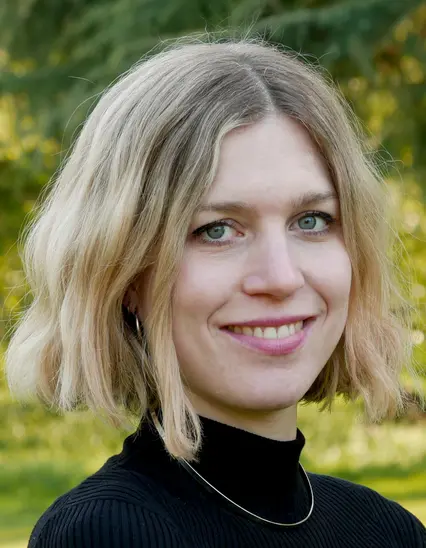
Affiliation:
Group of Statistical Physics Beyond Equilibrium, Max Planck Institute for Dynamics and Self-Organization, Germany .
Short bio:
Dr. Sarah A. M. Loos is a Research Associate at the University of Cambridge, working in the Department of Applied Mathematics and Theoretical Physics (DAMTP). Her research lies at the intersection of soft matter physics, active matter, and statistical mechanics, with a particular focus on understanding how collective behaviors emerge in systems far from equilibrium, such as biological tissues and synthetic active materials. She develops and studies theoretical models describing self-organization, pattern formation, and dynamical phase transitions in complex fluids.
Her current research examine the statistical physics of living and active systems that break detailed balance at the microscopic level, focusing on the collective phenomena emerging from nonequilibrium dynamics. Her work has been published in top-tier scientific journals, including Nature Nanotechnology, Physical Review X, Physical Review Letters, and Scientific Reports.
Ralf Metzler — University of Potsdam, Germany

Affiliation:
University of Potsdam.
Short bio:
Ralf Metzler is a professor of physics at the University of Potsdam and a leading figure in the field of anomalous transport and stochastic processes in complex and biological systems. His research focuses on non-Markovian dynamics, fractional diffusion equations, first-passage and stochastic resetting processes, with applications ranging from intracellular transport and gene regulation to soft matter and polymer, but also economy and finance. Prof. Metzler has significantly contributed to our understanding of how memory and heterogeneity shape transport in complex media. More information and a list of his publications can be found on his web page:
https://www.agnld.uni-potsdam.de/
Rik Wensink. –University of Paris-Saclay, France
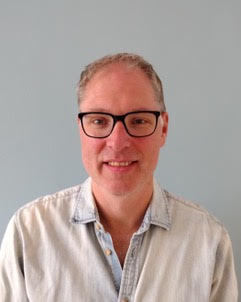
Affiliation:
Laboratoire de Physique des Solides (LPS), CNRS & University of Paris-Saclay, Orsay, France
Short bio:
Dr. Rik Wensink is a soft condensed matter theorist interested in self-assembly, phase behavior and dynamical aspects of a wide variety of soft matter systems. He holds a PhD (2004) in physical chemistry from Utrecht University (the Netherlands), and has been awarded a Humboldt postdoctoral research fellowship at the University of Düsseldorf (Germany) and a Ramsay fellowship at the Department of Chemical Engineering, Imperial College (UK). He is currently a CNRS research director at the LPS/Paris-Saclay University.
His main interests are lyotropic liquid crystals, active matter (bacterial fluids) and other bio-inspired colloidal soft matter (filamentous virus rods, cellulose nanocrystals). His recent research work is directed to studying basic mechanisms of self-organisation of lamellar structures and membranes, reversibly polymerising and shape-disperse nematogens, and hybrid colloidal-molecular liquid crystals as well as chirality transfer in biopolymer liquid crystals. More information can be found on his research website:
https://equipes2.lps.u-psud.fr/rik/
Rosendo Pérez-Isidoro — Centro de Investigación en Química Aplicada (CIQA), Monterrey

Affiliation:
Centro de Investigación en Química Aplicada CIQA-SECIHTI, Unidad Monterrey
Short bio:
Dr. Rosendo Pérez-Isidoro has developed a robust and interdisciplinary research portfolio at the intersection of biophysics and applied physical chemistry. His work encompasses a wide range of topics, including the diffusion of neurotransmitters and anesthetics through lipid membranes, the biophysical and thermodynamic interactions between lipids and proteins, and the development of biohybrid vesicles for drug delivery. These studies form the foundation of a broader research effort focused on lipid-based systems such as liposomes, nanomaterials, and biohybrid assemblies for biomedical applications. In parallel, Dr. Pérez-Isidoro has explored practical analytical approaches, such as droplet evaporation techniques for the identification of physicochemical properties of soft colloidal systems, bridging fundamental science with real-world contexts.
He has published extensively in leading international journals, including Biochimica et Biophysica Acta (BBA), Journal of Materials Chemistry B, and Colloids and Surfaces B. His interdisciplinary approach not only advances the understanding of complex membrane phenomena but also contributes to the development of innovative tools with applications in biophysics, material and biomedical sciences, and beyond.
https://scholar.google.com/citations?user=KjroMHIAAAAJ&hl=en
Mónica Olvera de la Cruz — Northwestern University, USA

Affiliation:
Lawyer Taylor Professor of Materials Science & Engineering; Professor of Chemistry; and (by courtesy) of Chemical & Biological Engineering, Physics & Astronomy. Northwestern University, USA. Director of the Center for Computation & Theory of Soft Materials, and Deputy Director of the Center for Bio-Inspired Energy Science.
Short bio:
Dr. Mónica Olvera de la Cruz is a distinguished soft-matter theorist whose research centers on the design and control of complex molecular assemblies. She develops theoretical frameworks to explain the self-assembly, thermodynamics, and electrostatic behaviors of heterogeneous molecules—ranging from copolymers and polyelectrolytes to ionic fibers and membranes. Her team’s work has led to breakthroughs in biomimetic materials, nanostructured colloids, and electrolyte systems, with applications spanning from gel electrophoresis to COVID‑19 spike protein interactions. A Northwestern faculty member since 1986, Dr. Olvera de la Cruz has earned numerous accolades: member of the US National Academy of Sciences (2012) and American Philosophical Society (2020); recipient of the APS Polymer Physics Prize (2017); and honoree with Packard and Sloan Fellowships, among others.
https://aztec.tech.northwestern.edu
Profile link:
https://www.mccormick.northwestern.edu/research-faculty/directory/profiles/olvera-de-la-cruz-monica.html
Moises Santillán — CINVESTAV, Mexico

Affiliation:
CINVESTAV–Monterrey (Centro de Investigación y de Estudios Avanzados del Instituto Politécnico Nacional)
Short bio:
Dr. Moisés Santillán Zerón is a principal investigator and expert in the biomedical engineering and applied mathematics of complex fluid manipulation. His research focuses on the electrohydrodynamics of non-Newtonian and microfluidic flows, including the control of complex fluids using electric fields and their behavior in confined geometries. Based at CINVESTAV–Monterrey, he directs work at the interface of theoretical modeling and experimental design in biophysics and biomedical systems. Dr. Santillán has authored over 45 peer-reviewed publications and maintains a strong involvement in both international research and engineering education.
https://www.cinvestav.mx/mty/investigacion/directorio-de-investigacion/Mois233s-Santill225n-Zer243n
Google Scholar profile:
https://scholar.google.com/citations?user=KjroMHIAAAAJ&hl=en
Alberto Fernández Nieves — Universidad de Barcelona, Spain

Affiliation:
ICREA Professor, Department of Condensed Matter Physics, University of Barcelona, Spain; also holds the position of Associate Professor in the School of Physics at Georgia Institute of Technology, USA.
Short bio:
Dr. Alberto Fernández‑Nieves is a leading researcher in experimental soft condensed matter. Born in Granada in 1973, he earned his PhD in Physics at the University of Granada in 2000. He completed a postdoctoral fellowship at Harvard under Prof. David A. Weitz, followed by academic roles at the University of Almería, Harvard, and Georgia Tech, where he became tenured in 2014. In 2019, he joined the University of Barcelona as an ICREA Professor. His research investigates topological defects, liquid crystals, colloids, polymer gels, active and granular matter, and electrohydrodynamic instabilities in drops and jets—using advanced microscopy, scattering techniques, and rheology. He was named Fellow of the American Physical Society in 2023.
tandfonline.com+8icrea.cat+8app.jove.com+8
Profile link (ICREA):
https://www.icrea.cat/community/icreas/21549/alberto-fernandez-nieves/
Juan Manuel Ceballos Guzmán — Universidade de Santiago de Compostela, Spain

Affiliation:
Universidade de Santiago de Compostela
Short bio:
Juan Manuel Ceballos Guzmán graduated in Chemistry from the Autonomous University of Nuevo León in 2017 and earned a master’s degree in Materials Science from the Research Center for Advanced Materials (CIMAV–Monterrey) in 2019, where he worked on the electrochemical synthesis of hierarchical nanostructures for Surface-Enhanced Raman Spectroscopy (SERS) applications. He completed his PhD in 2024 at the University of Santiago de Compostela, focusing on the synthesis and characterization of plasmonic-nanoMOF composites as part of the HeatNMof project.
Alfredo Alexander-Katz — MIT Department of Materials Science and Engineering, USA

Affiliation:
Michael & Sonja Koerner Professor of Materials Science and Engineering, MIT Department of Materials Science & Engineering (DMSE), Massachusetts Institute of Technology, USA.
Short bio:
Dr. Alfredo Alexander‑Katz leads a pioneering research program at the intersection of materials science, soft matter physics, and biophysics. His group integrates analytical theory, simulations, and experiments to study self-assembly and dynamics in biological and bio-inspired soft materials. They design three-dimensional copolymer structures, engineer random heteropolymers as protein mimics, and explore active matter phases. His doctoral work focused on copolymer self-assembly (UC Santa Barbara, 2004), followed by NSF- and CNRS-funded postdoctoral research in Munich and Paris, including a breakthrough study on shear-induced blood clotting. Since joining MIT in 2008, he has earned awards such as the DOD Early Career Award (2013) and “Committed to Caring” in 2021, and continues to push boundaries in soft materials science.
https://dmse.mit.edu/people/faculty/alfredo-alexander-katz-2/?utm_source=chatgpt.com
Google Scholar profile:
https://scholar.google.com/citations?user=PgO-zHIAAAAJ